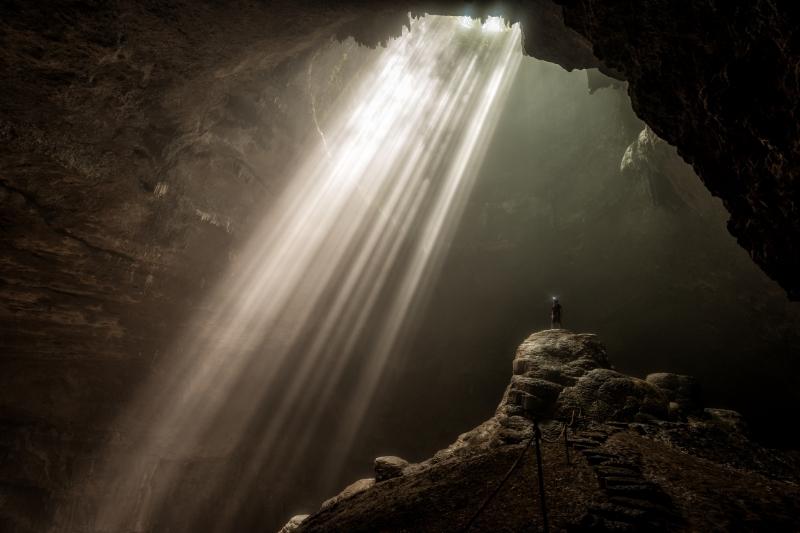
Deep beneath the limestone hills of Gunung Kidul, a single beam of sunlight pierces the darkness and floods the floor of an ancient underground cavern — turning what should be pitch black into something that looks like a doorway to another world. This is Jomblang Cave, one of the most visually spectacular natural sites in all of Southeast Asia, and one of the most strictly protected.
Every year, travellers from across the globe make the journey to Yogyakarta, Indonesia, specifically to rappel down the 60-metre vertical shaft of Jomblang Cave and witness the famous Light of Heaven (Cahaya Surga) in person. With only 60 visitors allowed per day, this is not a cave you can simply turn up to. You need to plan. This complete guide tells you everything you need to know.
What Is Jomblang Cave?
Jomblang Cave (locally known as Goa Jomblang) is a vertical collapse cave located in the village of Pacarejo, Semanu District, Gunung Kidul Regency — about 65 kilometres southeast of Yogyakarta city centre. It was formed thousands of years ago when the roof of an ancient limestone cavern collapsed inward, creating a wide open pit that now plunges roughly 60–80 metres underground.
What makes Jomblang Cave extraordinary is what grew inside after the collapse: cut off from the outside world for millennia, a self-contained prehistoric jungle thrives on the cave floor, fed by the single shaft of light from above. Ferns, mosses, and ancient plant species carpet the cave bottom in deep green — a surreal sight when you first touch down after your rappel descent.
But the cave’s most famous feature lies a 300-metre walk further inside: the main chamber, where the Light of Heaven appears.
The Light of Heaven: What It Is and Why It Happens
The Light of Heaven — Cahaya Surga in Indonesian — is the natural phenomenon that has made Jomblang Cave internationally famous. Around midday each day, when the sun reaches the right angle, a single concentrated beam of light penetrates through the cave’s vertical opening and fires straight down into the ancient cavern below.
The effect is extraordinary. The underground air is thick with moisture from the prehistoric jungle, making the light beam visible in three dimensions — a solid, luminous column hanging in the darkness like something from a film set. Photographs taken in this moment have circulated globally, and for good reason: it is genuinely unlike anything else you will see on Earth.
The beam is typically visible between 10:00 and 13:00 local time, with the peak intensity occurring around 11:00–12:00. Most Jomblang Cave tours are designed specifically so that groups arrive in the main chamber during this window.
Jomblang Cave Ticket Price & Tour Costs
Unlike most natural attractions in Indonesia, Jomblang Cave does not sell individual entrance tickets. All visitors must book through a licensed tour operator, and the cost covers the full experience — transport, equipment, guide, and entrance fee.
Package TypeApprox.Price (IDR)Approx.
| Price (USD) | Includes | ||||
|---|---|---|---|---|---|
| Standard Group Tour | Rp 700,000–900,000 | USD 45–58 | Transport from Yogya, guide, rappelling gear, entrance, lunch | ||
| Semi-Private (3–5 pax) | Rp 950,000–1,200,000 | USD 62–78 | As above + smaller group, more flexible schedule | ||
| Private Tour (1–2 pax) | Rp 1,400,000–1,800,000 | USD 90–120 | Full private guide, priority slot, customised itinerary | ||
| Combo: Jomblang + Pindul Cave | Rp 900,000–1,100,000 | USD 58–72 | Both caves in one day, transport, guide, gear, lunch | ||
⚠️ Prices are indicative and vary between operators. Always confirm current pricing directly with your chosen tour company before booking. Prices may be higher during peak season (June–August and December holidays).
How to Enter Jomblang Cave: The Rappelling Experience
Entering Jomblang Cave is itself an adventure that many visitors say is as memorable as the Light of Heaven. Here is what to expect, step by step.
Step 1: The Descent (Rappelling Down)
At the cave rim, your guide will fit you with a harness, helmet, and gloves. A rope is secured to an anchor at the top, and — one by one — visitors rappel down the vertical shaft. The descent is approximately 60–80 metres, depending on the entry point used. You do not need previous climbing or rappelling experience; guides control the rope speed from above. The descent takes around 5–10 minutes per person.
Step 2: The Prehistoric Jungle Floor
At the bottom, you land in a lush, green world. The prehistoric jungle on the cave floor is unlike anything above ground — ancient ferns, hanging mosses, and plant species that have evolved in isolation for thousands of years surround you. Guides lead you along a dirt path through this underground forest toward the main cave entrance.
Step 3: The Underground Passage
The walk from the jungle pit to the main cavern is approximately 300 metres through a dark horizontal passage. You wear a headlamp for this section. The cave walls are ancient limestone, sometimes decorated with natural formations. The air is cool and humid — around 22–24°C even in the height of summer.
Step 4: The Light of Heaven Chamber
The passage opens into the main cavern. If the timing is right — between 10:00 and 13:00 — you will witness the Light of Heaven: a vertical beam of sunlight cutting through the darkness, illuminating the cave floor in a golden column. This is the moment most visitors have travelled thousands of miles to see. Groups typically spend 20–40 minutes here before returning through the passage.
Step 5: The Ascent
Visitors return to the jungle pit and ascend via a mechanical winch system — you sit in the harness and are lifted to the surface. This is generally easier than the descent for most visitors, particularly those who found the initial rappel daunting.
What to Wear and Bring to Jomblang Cave
Packing correctly for Jomblang Cave makes a significant difference to your comfort and safety. The cave is cool and muddy, the jungle floor is wet, and the rappelling involves physical exertion.
| Item | Recommended | Notes |
|---|---|---|
| Clothing | Long trousers + long-sleeve shirt | Protects from rope friction and mud; avoid shorts |
| Footwear | Closed shoes or trail shoes | Sandals and flip-flops are not permitted |
| Gloves | Provided by operator | Protect hands during rappel; usually included |
| Camera | DSLR, mirrorless, or GoPro | Waterproof bag recommended; no tripod in cave |
| Headlamp | Usually provided by operator | Confirm with your tour operator in advance |
| Water | At least 500ml per person | No food or drinks in the cave itself |
| Dry bag / Ziplock | Highly recommended | Protect phone, camera, and valuables from mud |
How to Get to Jomblang Cave from Yogyakarta
Jomblang Cave is located in Gunung Kidul, approximately 65 km southeast of Yogyakarta city centre. The drive typically takes 1.5–2 hours via the main road through Wonosari.
Option 1: Book a Tour (Recommended)
The simplest and most practical way to reach Jomblang Cave is as part of a guided tour that includes hotel pickup from Yogyakarta. Most operators collect guests between 06:00 and 07:30 to ensure arrival at the cave in time for the Light of Heaven window. This is the recommended option for most visitors, as the cave has no public transport access and the road in the final section requires a local guide’s knowledge.
Option 2: Rent a Motorbike or Car
Independent travellers can rent a motorbike or hire a private car from Yogyakarta. Use Google Maps with the search term “Goa Jomblang” for navigation. The main road via Wonosari is well-paved; the final few kilometres to the cave entrance are on a rougher rural road. Note: you will still need to have a pre-booked slot with a local operator — you cannot self-guide inside the cave.
Best Time to Visit Jomblang Cave
Choosing the right time to visit Jomblang Cave Yogyakarta significantly affects both the experience and your likelihood of actually getting a booking.
| Season | Months | Light of Heaven | Booking Difficulty |
|---|---|---|---|
| Peak Dry Season | June – August | Excellent (clear skies) | Very high — book 4–8 weeks ahead |
| Shoulder Season | April–May, September–October | Good (generally clear) | Moderate — book 2–4 weeks ahead |
| December Holidays | Dec 20 – Jan 5 | Variable (can be cloudy) | Very high — book 4–8 weeks ahead |
| Wet Season | November – March | Variable / sometimes cancelled | Lower demand — easier to book |
The Light of Heaven is a sunlight phenomenon, which means on overcast days the beam is weak or invisible. Operators generally do not offer refunds for poor light conditions unless the tour is cancelled entirely for safety reasons (e.g., flooding). The dry season months of June, July, and August consistently deliver the strongest, clearest beam.
Jomblang Cave vs. Pindul Cave: Which Should You Visit?
Many visitors to Gunung Kidul are choosing between — or combining — Jomblang Cave and the nearby Pindul Cave. Both are exceptional, but they offer very different experiences.
| Jomblang Cave | Pindul Cave | |
|---|---|---|
| Experience type | Vertical rappelling + dark cave walk | River tubing through cave passages |
| Physical demand | Moderate (rappelling, walking) | Low (floating on inner tube) |
| Main attraction | Light of Heaven beam | Cave river, bats, crystal formations |
| Visitor limit | 60 per day (strict) | Higher capacity, easier to book |
| Duration | 4–6 hours including transport | 2–3 hours including transport |
| Suitable for children? | Limited (7+ years, no fear of heights) | Yes (family-friendly) |
| Best for | Adventure seekers, photographers | Families, casual visitors |
Many operators offer a Jomblang + Pindul combo tour that visits both caves in one day. If your schedule allows, this is an excellent way to see contrasting cave experiences in Gunung Kidul without doubling your transport costs.
Safety at Jomblang Cave: What You Need to Know
Jomblang Cave is an adventure activity, and like all adventure activities it carries inherent risks. However, the cave is managed by experienced, licensed operators, and safety standards are well-established. Here is what you should know.
- All equipment is provided and checked before use. Harness, helmet, gloves, and rope systems are inspected by guides before each group descends.
- Tours are cancelled in severe weather. Heavy rain can cause flooding in the cave passages and make the rappel shaft dangerously slippery. Operators will cancel or postpone tours if conditions are unsafe.
- No prior experience is required, but inform your operator of any medical conditions (heart issues, vertigo, claustrophobia) before booking — some conditions may disqualify you from the activity.
- The 60-person daily limit is a conservation measure, not just a commercial one. The prehistoric jungle and cave ecosystem are fragile; staying on marked paths and not touching formations is mandatory.
- Leave No Trace rules apply. No food inside the cave, no flash photography that could disturb the ecosystem, and all waste must leave with the group.
Jomblang Cave is one of those rare travel experiences that genuinely exceeds the photographs. The act of rappelling into the earth, landing in a prehistoric jungle no ordinary tourist ever sees, walking through ancient darkness, and then watching a single beam of sunlight illuminate the cave floor in front of you — it is genuinely humbling, and genuinely unforgettable.
The 60-person daily limit means this is never going to be a mass-market attraction. That exclusivity is exactly what makes it worth planning for. Book early, choose a reputable operator, pack the right gear, and trust the process. The Light of Heaven does not disappoint.
Frequently Asked Questions About Jomblang Cave
What is Jomblang Cave?
Jomblang Cave is a vertical collapse cave in Gunung Kidul, Yogyakarta, Indonesia. Formed when the roof of an ancient limestone cavern collapsed thousands of years ago, it now contains a prehistoric jungle at its base and is world-famous for the Light of Heaven — a single dramatic beam of sunlight that illuminates the main cave chamber around midday.
How much does it cost to visit Jomblang Cave?
Jomblang Cave can only be visited through a licensed tour operator — individual tickets are not sold. Tours typically cost between IDR 700,000 and IDR 1,800,000 per person (approximately USD 45–120), depending on group size and package type. The price generally includes transport from Yogyakarta, rappelling equipment, guide, entrance fee, and lunch.
What is the Light of Heaven at Jomblang Cave?
The Light of Heaven (Cahaya Surga) is a natural phenomenon where a single concentrated shaft of sunlight enters through the cave's vertical opening and illuminates the floor of the main chamber in a dramatic beam. Visible roughly between 10:00 and 13:00, the beam appears three-dimensional due to the moisture-saturated underground air, creating one of the most photographed natural sights in Indonesia.
How do visitors enter Jomblang Cave?
Visitors enter by rappelling down a vertical rope from the cave rim, descending approximately 60–80 metres to the jungle floor below. No experience is needed — guides manage the ropes throughout. From the bottom, a 300-metre walk through a dark passage leads to the main Light of Heaven chamber. The ascent back to the surface uses a mechanical winch.
How many people are allowed in Jomblang Cave per day?
Jomblang Cave strictly limits entry to 60 visitors per day to protect its fragile prehistoric ecosystem. This quota means the cave books out weeks or months in advance during peak season (June–August and December–January). Advance booking through a licensed operator is essential — walk-in visits are not possible.
What is the best time to visit Jomblang Cave?
The dry season (April–October) is best, with June–August offering the clearest skies and strongest Light of Heaven beam. Tours are scheduled to arrive in the cave between 10:00–13:00 when the phenomenon occurs. Avoid the wet season peak (November–March) as heavy rain can affect safety and visibility. Book at least 2–4 weeks ahead; 4–8 weeks ahead in peak months.